Guides
Refrigerant Cylinder Safety: Storage, Handling and Transport Basics
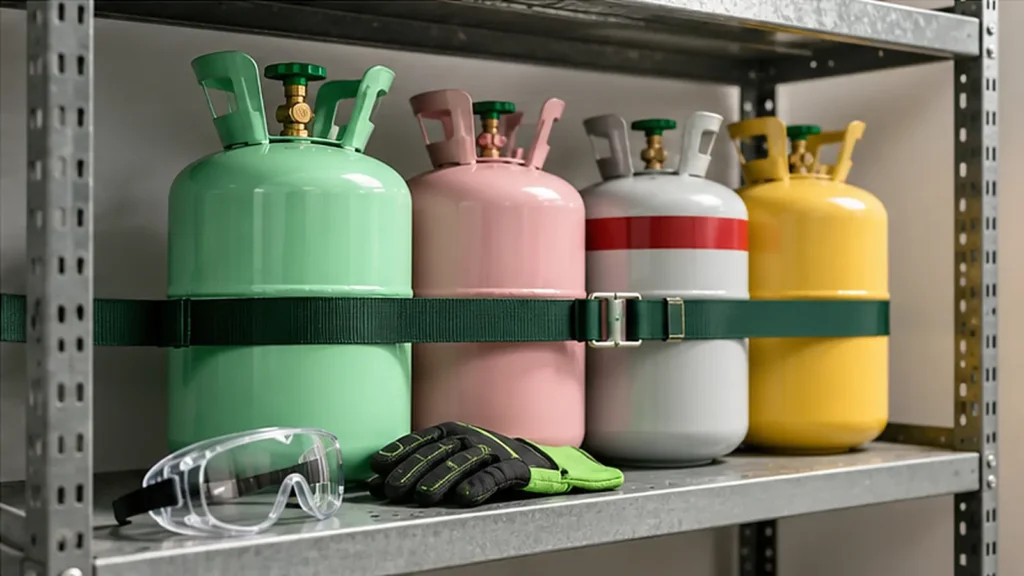
Every refrigerant cylinder holds liquefied gas under pressure. Handled correctly, it is a routine part of HVAC and automotive work. Handled carelessly, it can cause frostbite, injuries or a release into the atmosphere. Here are the basics for storing, handling and transporting cylinders safely.
Always read first: the cylinder label and the refrigerant’s safety data sheet (SDS) are your primary guides. The tips below are general and do not replace them.
Know your cylinder
- Disposable cylinders are made for one use only. Federal rules prohibit refilling them. When empty, they are disposed of according to local rules, never refilled.
- Refillable and recovery cylinders can be reused. They must be inspected and periodically requalified under U.S. Department of Transportation (DOT) rules, usually every five years. Check the test date stamped on the cylinder before you fill it.
- The label tells you the refrigerant, the net weight, safety warnings and, for lower-flammability (A2L) refrigerants such as R-454B, R-32 and R-1234yf, additional flammability markings. Many A2L cylinders also carry a red band and use left-hand-thread valves.
Storage
- Keep cylinders cool. Store them in a cool, dry, well-ventilated place, out of direct sunlight and away from heaters, boilers and other heat sources. Cylinder labels commonly warn against exceeding 125°F (52°C), because pressure rises quickly with temperature.
- Store them upright and secured with a strap, chain or rack so they cannot tip or roll.
- Keep the valve protected. Keep caps on and valves closed when a cylinder is not in use.
- Separate full and empty cylinders, and keep recovered refrigerant in properly labeled recovery cylinders, separate from new product.
- Keep A2L refrigerants away from ignition sources such as open flames, sparks and electrical equipment that is not rated for the area.
Handling on the job
- Wear safety glasses and refrigerant-rated gloves. Liquid refrigerant can cause frostbite on contact with skin or eyes.
- Never heat a cylinder with an open flame or torch. If you need to warm a cylinder to help charging, use a method approved by the cylinder or equipment manufacturer.
- Never overfill. Recovery cylinders should generally be filled to no more than 80% of their liquid capacity, so there is room for expansion. Use a scale.
- Use the correct fittings and hoses for the refrigerant and pressure, and check them for wear before use.
- Work in a ventilated area. Refrigerant vapor is heavier than air and can collect in low or enclosed spaces, displacing oxygen.
- Do not vent refrigerant. Federal law prohibits knowingly releasing refrigerant during servicing. Recover it with approved equipment.
Transport in your vehicle
- Secure cylinders upright so they cannot move during braking or turns.
- Keep the cargo area ventilated and do not carry cylinders in a closed passenger compartment if you can avoid it.
- Do not leave cylinders in a parked vehicle in hot weather or direct sun.
- Keep valve caps on and valves closed while driving.
- Commercial transport can be subject to DOT hazardous materials rules. Check what applies to your business.
How we ship your order
Refrigerant cylinders are regulated compressed gas, so Home Velvet ships them by ground service only, packaged and labeled as required. Orders containing restricted refrigerant ship after we have verified the buyer’s EPA certification. Delivery times are listed in our shipping policy.
When your package arrives, inspect the cylinder before storing it. If it is damaged or leaking, do not use it. Move it to a safe, ventilated outdoor area and contact us.
Disposing of empty cylinders
- Make sure a disposable cylinder is truly empty by recovering any remaining refrigerant with approved equipment.
- Follow your local rules for scrap metal and pressurized containers. Many recyclers have specific requirements for refrigerant cylinders.
- Return refillable and recovery cylinders to the supplier or reclaimer, according to their program.
Quick safety checklist
- Read the label and SDS.
- Wear safety glasses and gloves.
- Store upright, secured, cool and ventilated.
- No open flames, ever.
- Fill recovery cylinders no more than 80%.
- Recover, never vent.
Learn more
- EPA: Section 608 stationary refrigeration and air conditioning
- Who Can Buy Refrigerant? EPA Section 608 and 609 Rules Explained
This article is general safety information. Always follow the cylinder label, the safety data sheet, the equipment manufacturer’s instructions and the regulations that apply to you.