Guides
R-32 vs R-454B: Which Refrigerant Is in Your Next System?
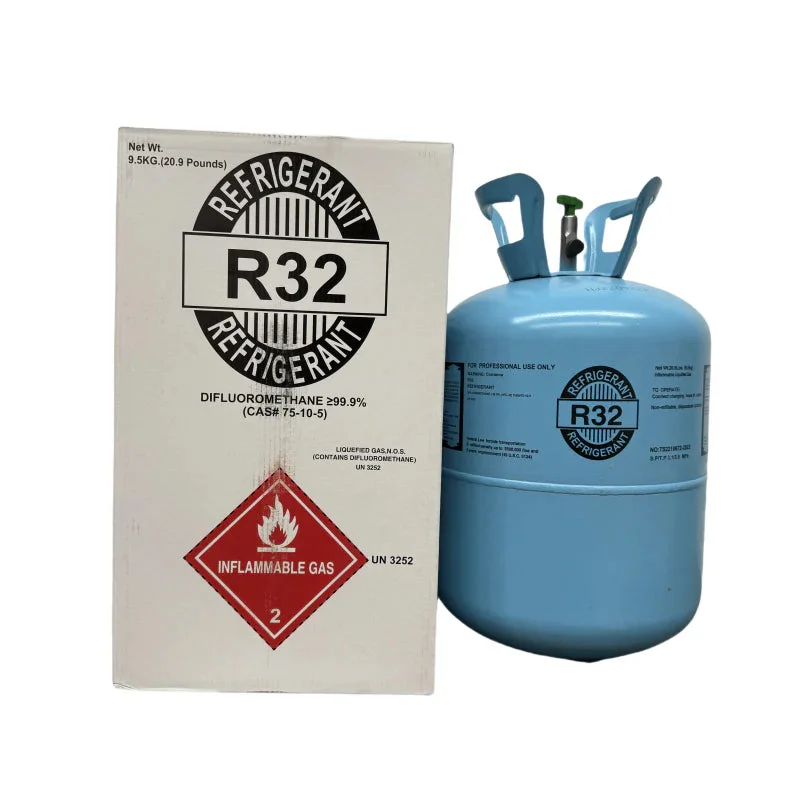
R-410A is being replaced in new U.S. air conditioners and heat pumps by two lower-GWP refrigerants: R-32 and R-454B. Each manufacturer picked one, so most technicians now work with both. Here is how they differ and what that means on the job.
In short: both are A2L (lower flammability) refrigerants for new equipment only. R-454B is a blend designed to behave much like R-410A. R-32 is a single-component refrigerant with higher pressures and capacity, and it can be charged as vapor. Never mix them or use one in a system built for the other.
R-32 vs R-454B at a glance
| R-32 | R-454B | |
|---|---|---|
| Type | Single-component HFC | Blend of about 69% R-32 and 31% R-1234yf |
| ASHRAE safety class | A2L | A2L |
| GWP (AR4) | about 675 | about 466 |
| Temperature glide | None | Small (about 1–2 °F) |
| Pressures | Higher than R-410A | Close to R-410A |
| Charging | Vapor or liquid | Liquid |
| Lubricant | POE | POE |
| Typical use | Ductless mini-splits and some ducted systems | Many new ducted split systems and heat pumps |
Who uses which
Manufacturers announced their choices during the transition. Daikin, Goodman, Amana, LG and Fujitsu went with R-32, while Carrier, Bryant, Trane, American Standard, Lennox, Johnson Controls (York, Coleman, Luxaire), Rheem, Ruud and Nortek went with R-454B. Always check the nameplate: it is the final word on the refrigerant and the charge.
What the differences mean in the field
- Charging: R-32 has no glide, so it can be charged as vapor. R-454B is a blend and should be charged as liquid so its composition stays correct.
- Pressures: R-454B pressures track R-410A closely, so readings feel familiar. R-32 runs higher, so use the correct pressure-temperature chart and make sure gauges and hoses are rated for it.
- Charge size: R-32 systems usually need a smaller charge for the same capacity, which helps keep the amount of refrigerant in a home low.
- Discharge temperature: R-32 compressors tend to run with higher discharge temperatures, so manufacturers design compressors and controls for it. Follow the manufacturer’s charging and troubleshooting tables, not R-410A habits.
What stays the same
- Both are A2L refrigerants: use A2L-rated recovery machines and leak detectors, remove ignition sources, ventilate, and install and test the equipment’s leak sensors as the manufacturer instructs. Read what an A2L refrigerant is for the basics.
- Both use gray cylinders with a red band, usually with left-hand-thread valves. See how to read a refrigerant cylinder label.
- Neither is a retrofit refrigerant for R-410A systems. Keep R-410A systems on R-410A. See R-410A vs R-454B for that comparison.
- Both require EPA Section 608 certification to buy and handle.
Working on a system? Use our R-410A and R-454B pressure–temperature chart to calculate superheat and subcooling, and see how much refrigerant a 3-ton AC needs.
Which should you stock?
Stock the refrigerant used by the brands you install and service. Many contractors keep both on the truck, plus R-410A for existing systems.
This article is general information, not engineering advice. Always follow the equipment manufacturer’s instructions. Questions? Contact our team.