Guides
What Is an A2L Refrigerant? A Guide for Technicians
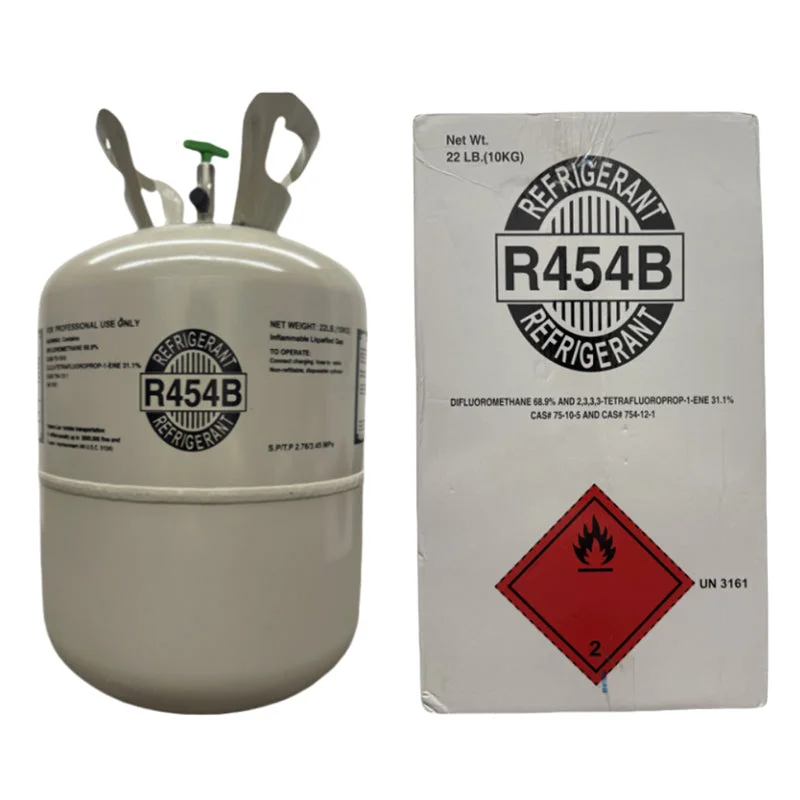
“A2L” is now printed on many new refrigerant cylinders and equipment nameplates, including R-454B, R-32 and R-1234yf. Here is what the label means, how A2L refrigerants differ from the A1 refrigerants technicians grew up with, and what changes in day-to-day work.
What A2L means
ASHRAE Standard 34 gives every refrigerant a two-part safety class:
- The letter is toxicity. “A” means lower toxicity, “B” means higher toxicity.
- The number is flammability. “1” means no flame propagation in the standard test, “2L” means lower flammability, “2” means flammable, and “3” means higher flammability (for example propane, R-290).
So an A2L refrigerant has lower toxicity and lower flammability. The “L” is for low burning velocity: an A2L burns at no more than 10 cm/s. In practice A2L refrigerants are hard to ignite, need a much stronger ignition source than a static spark, and burn slowly if they do ignite. They are not non-flammable, though, which is why procedures change.
Common A2L refrigerants
| Refrigerant | Used in | GWP (AR4) |
|---|---|---|
| R-454B | New residential and light-commercial A/C and heat pumps | about 466 |
| R-32 | Ductless mini-splits and some new A/C systems | about 675 |
| R-1234yf | Vehicle A/C in most newer cars | below 1 |
By comparison, R-410A, R-22, R-134a, R-404A, R-448A and R-449A are all A1.
Why the industry moved to A2L refrigerants
Under the AIM Act and EPA’s Technology Transitions rules, new air conditioners and heat pumps must use refrigerants with a much lower global warming potential than R-410A. Most refrigerants that meet those limits with good efficiency are A2L. See what the 2026 EPA rule means for R-410A.
What changes in the equipment
Equipment safety standard UL 60335-2-40 sets rules for A2L systems, such as charge limits based on room size and, above certain charge amounts, a built-in refrigerant leak sensor with mitigation controls. If the sensor detects a leak, the system reacts automatically, for example by running the indoor fan to disperse the refrigerant. These sensors self-test and must be installed and wired exactly as the manufacturer instructs. Building codes based on ASHRAE Standard 15 also apply.
What changes for technicians
- Tools: many gauges and hoses rated for R-410A pressures still work. Use recovery machines and electronic leak detectors that their manufacturer rates for A2L refrigerants.
- Ignition sources: keep open flames away while refrigerant is present, ventilate the work area, recover the charge fully and purge with nitrogen before brazing.
- Cylinders: A2L cylinders are gray with a red band and usually have a left-hand-thread valve. They ship as flammable gas. See how to read a refrigerant cylinder label.
- No retrofits: never put an A2L refrigerant into a system designed for an A1 refrigerant such as R-410A or R-22, and never mix refrigerants.
- Training: equipment manufacturers and trade groups offer A2L training, and many A2L systems need it for warranty support.
Who can buy A2L refrigerants
The same EPA sales restrictions apply as for other refrigerants: Section 608 certification for stationary A/C and refrigeration, and Section 609 for vehicle A/C containers over 2 lb. See who can buy refrigerant.
Related guides
- R-32 vs R-454B: which refrigerant is in your next system?
- R-410A vs R-454B: what changes for technicians
- Refrigerant cylinder safety: storage, handling and transport
- R-410A and R-454B pressure–temperature chart
- How much refrigerant does a 3-ton AC need?
This article is general information, not safety or legal advice. Always follow the equipment manufacturer’s instructions, the safety data sheet and local codes. Questions? Contact our team.