Guides
R-410A vs R-454B: What Changes for HVAC Technicians
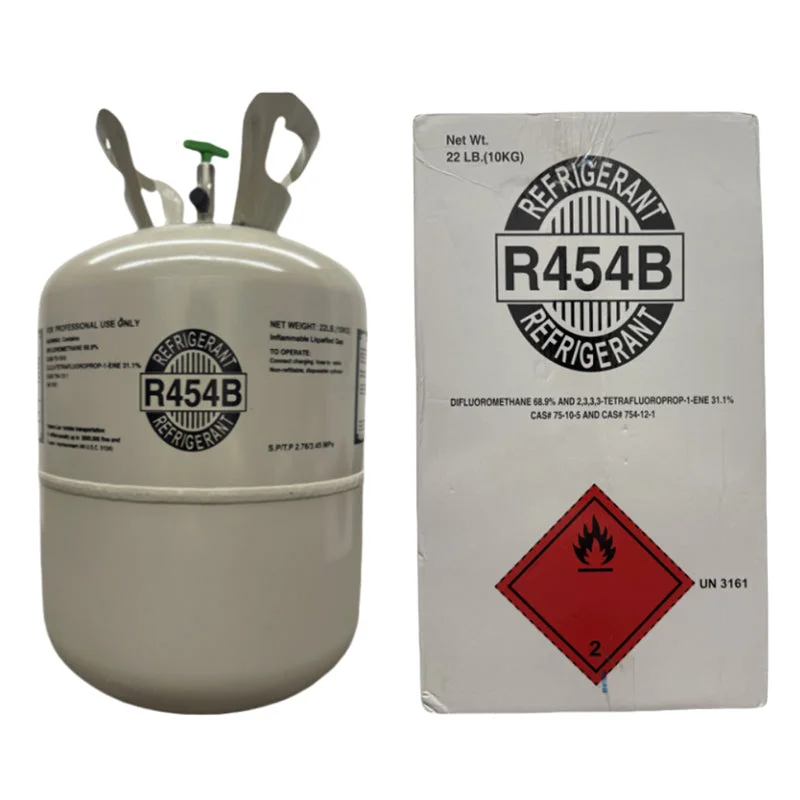
R-410A has been the standard refrigerant in U.S. residential air conditioners and heat pumps for about twenty years. Most new systems now ship with lower-GWP refrigerants, and R-454B is one of the most common. If you service both, here is what actually changes on the job, from the refrigerant itself to tools, cylinders and the rules.
In short: R-454B works at pressures close to R-410A, but it is an A2L (lower flammability) refrigerant. It is not a drop-in replacement, the two must never be mixed, and you need A2L-rated equipment and procedures to work on it.
R-410A vs R-454B at a glance
| R-410A | R-454B | |
|---|---|---|
| Type | HFC blend (R-32 / R-125) | HFO/HFC blend (R-32 / R-1234yf) |
| ASHRAE safety class | A1 (non-flammable) | A2L (lower flammability) |
| GWP (AR4) | about 2,088 | about 466 |
| Operating pressures | High-pressure refrigerant | Close to R-410A |
| Lubricant | POE | POE |
| Cylinder | Traditionally rose-colored; newer cylinders gray with the R-number on the label | Gray with a red band; usually a left-hand-thread valve |
| Typical use | Servicing existing R-410A systems | New residential and light-commercial A/C and heat pumps designed for it |
It is not a drop-in replacement
R-454B equipment is designed around the refrigerant: compressor, metering device, charge and safety controls. Never put R-454B into an R-410A system, never top off one refrigerant with the other, and never mix them in a recovery cylinder. An R-410A system stays on R-410A for its whole life; a system built for R-454B is charged only with R-454B. Always follow the charge and refrigerant on the unit nameplate.
What A2L means for your work
A2L refrigerants are hard to ignite and burn slowly, but they are not non-flammable, so procedures change:
- Tools: use recovery machines, vacuum pumps and leak detectors that the manufacturer rates for A2L refrigerants. Many gauges and hoses rated for R-410A pressures still work, but check the manufacturer’s rating.
- Ignition sources: keep open flames and sparking tools away from the work area, ventilate, and purge with nitrogen before brazing.
- Leak detection in the equipment: many R-454B systems include a refrigerant sensor and mitigation controls. Install, wire and test them exactly as the equipment manufacturer’s instructions say.
- Basics: read what an A2L refrigerant is.
- Training: manufacturers and trade groups offer A2L training. It is worth doing before your first install.
Charging and recovery
Both refrigerants are blends, so charge them as liquid unless the equipment manufacturer says otherwise, metering the liquid in slowly on the suction side. Recover each refrigerant into its own recovery cylinder rated for it, and label it clearly. Your EPA Section 608 certification covers both.
Cylinders look different
Under the industry’s AHRI Guideline N, refrigerant cylinders have moved to a common gray color, with the refrigerant identified by the label. A2L cylinders such as R-454B add a red band around the top and usually use a left-hand-thread valve, so an adapter may be needed for older hoses. Read the label every time instead of relying on the color. Our guide on how to read a refrigerant cylinder label explains each marking.
What the rules say in 2026
Under EPA’s Technology Transitions rule, new residential and light-commercial air conditioners and heat pumps built from new components must use a refrigerant with a GWP below 700, which is why R-454B and R-32 are now common in new equipment. In 2026, EPA removed the separate federal installation deadline for qualifying R-410A systems built from components manufactured or imported before January 1, 2025. Servicing existing R-410A systems with R-410A remains allowed. For the details, read R-410A in 2026: what the latest EPA rule means for HVAC technicians.
Because U.S. HFC production and import allowances keep shrinking under the AIM Act, R-410A supply is expected to tighten over time, so it pays to recover and reuse it carefully.
Working on a system? Use our R-410A and R-454B pressure–temperature chart to calculate superheat and subcooling, and see how much refrigerant a 3-ton AC needs.
Which one should you stock?
- R-410A 25 lb cylinder for repairs and maintenance on the very large installed base of R-410A equipment.
- R-454B 20 lb cylinder (Opteon XL41) for new systems designed for R-454B.
- R-32 20 lb cylinder if you install brands that use R-32, common in ductless mini-splits. See R-32 vs R-454B.
All refrigerant sales are restricted to EPA Section 608 certified technicians. See who can buy refrigerant for details.
This article is general information, not legal or engineering advice. Always follow the equipment manufacturer’s instructions and the latest EPA guidance. Questions? Contact our team.